First Time Client: Enjoy $50 Off Initial Treatment


 Blog List
Non-Surgical Cosmetic Procedures
Blog List
Non-Surgical Cosmetic Procedures
 August 27, 2026
 For many people, too much sweating is more than a daily annoyance. It can crumble your confidence, interfere with work, and make even the most basic social occasions stressful. Sweating is completely natural; it’s just your body’s way of cooling down. But if it occurs too often, or without any visible cause, then it may be a sign that something more profound is happening. That’s why figuring out the right treatment for heavy sweating really starts with knowing what’s causing it.
This guide explains common causes of excessive sweating, options for treatment, simple ways to manage at home, and when to see an aesthetic nurse practitioner or a medical director.
Overview of Heavy Sweating TreatmentHeavy sweating can result from primary hyperhidrosis, underlying medical conditions, medications, or everyday triggers like stress and heat. Recognizing warning signs such as chest pain, night sweats, unexplained weight loss, or dizziness helps determine when medical care is needed. Effective treatment for heavy sweating includes FDA-approved options like Botox, Dysport, and Xeomin, while proper diagnosis, personalized care, and timely treatment can improve comfort, confidence, and overall quality of life. |
Sometimes, the nerves signal to your sweat glands to produce extra sweat, even though there is no issue with your body. You’ll usually notice it in your palms, soles, underarms, or face, and it usually starts before the age of 24. Moreover, it usually stops once you fall asleep.
This type is different; it’s sweating that shows up because of something else happening in your body, not on its own. Diabetes, thyroid issues, menopause, and certain other things can all be behind it. It also tends to affect your whole body, and unlike the primary type, it doesn’t let up while you sleep.
Some medicines can actually make you sweat more than normal. This includes certain antidepressants, antibiotics, and insulin. Hormone treatments, strong pain relievers like opioids, and bladder medicines can also be a cause.
Your emotions play a bigger role than you might think. When you feel stressed, anxious, or scared, your body releases adrenaline, which helps to trigger sweating. Also, eating spicy food, drinking caffeine or alcohol, or being in a warm place can also cause it, even without any exercise.
Stop letting sweat take control over you. Get your personalized excessive sweating treatment plan, and start your journey today!
Sweating is the body’s natural way of regulating temperature, but it can become a concern when it occurs without any clear reason. If you find yourself sweating excessively while sitting in an air-conditioned room, resting, or performing minimal physical activity, it may indicate hyperhidrosis or another underlying issue. When sweating seems disproportionate to the environment or your activity level, it is worth seeking professional advice.
Heavy sweating can become a medical concern when it starts interfering with everyday activities. People who experience excessive perspiration may struggle with tasks such as holding a pen, using electronic devices, or maintaining a firm handshake. Constantly changing clothes, avoiding certain fabrics, or feeling self-conscious in social and professional settings are signs that sweating is affecting quality of life and may require treatment.
Occasional sweating during sleep can happen due to a warm room or heavy bedding, but frequent night sweats are different. Waking up with soaked sleepwear or damp sheets on a regular basis may signal an underlying health issue. Persistent night sweating should not be ignored, particularly if it occurs without an obvious environmental cause.
Constant moisture on the skin can create an environment where irritation, rashes, and infections are more likely to occur. Individuals with excessive sweating may experience chafing, redness, fungal infections, or persistent body odor despite maintaining good hygiene. When sweating begins to affect skin health, professional treatment may be necessary to prevent ongoing discomfort and complications.
For many people, excessive sweating is more than a physical issue; it can also take a toll on emotional well-being. Visible sweat stains, damp palms, or facial perspiration can lead to embarrassment, anxiety, and reduced self-confidence. Some individuals may avoid social gatherings, public speaking, or close interactions because of their symptoms. When sweating negatively impacts mental health or social participation, seeking medical treatment for heavy sweating can significantly improve quality of life.
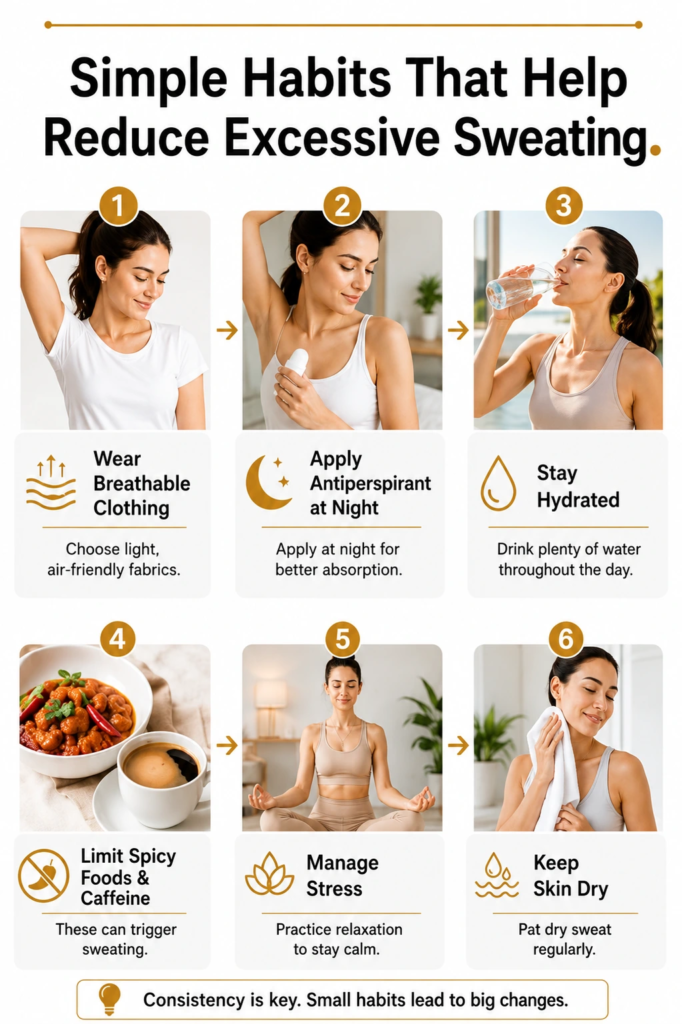
Small daily changes can help you manage excessive sweating alongside medical treatment. Things like wearing the right fabrics or adjusting what you eat can work together to help you feel drier and more comfortable all day.
Botox injections work by blocking the signal that tells sweat glands to produce more sweat. As a sweat reduction treatment, it’s FDA-approved for treating heavy underarm sweating and can cut sweating by over 80%. You’ll start seeing results in three to four days, and the effects usually last up to six months before you need another session.
Dysport sweat reduction treatment works similarly to Botox, blocking the nerve signal that tells sweat glands to produce more sweat. Dysport starts working a bit faster than Botox, so by three weeks, you may notice quicker results. But by eight weeks, both treatments end up working about the same. So the aestheticians typically use more units of Dysport than Botox to get the same effect.
Xeomin is a purified version of botulinum toxin without extra proteins added in it, which some medical directors believe may lower the chance of your body building resistance over time. Doctors first test the skin with a starch-iodine test to find the sweatiest spots, then inject small amounts directly into those areas for precise, targeted treatment. This makes Xeomin a reliable hyperhidrosis treatment option for those seeking longer-lasting results.
Curious about our other treatments? Explore options like fat-dissolving injections, dermal fillers, neurotoxin, filler dissolving, and other treatments to round out your aesthetic goals.
So many of us suffer from sweaty armpits, but the good news is that it doesn’t have to be a life sentence. At Soirée Aesthetics, we provide real-life experience with FDA-approved treatments to give each client genuine care. Whether it’s sweaty palms, soaked underarms, or facial sweating that won’t stop, our Houston team creates a personalized treatment you actually need.
It’s time to feel dry, comfortable, and confident again. Schedule your consultation with Soirée Aesthetics now and get started!
Most people only feel a little pinch during the injections. If you’re worried about pain, a numbing cream can be applied first to make it more comfortable. The whole thing is quick.
Yes, you can go back to your normal day right after treatment. Just skip hard workouts and don’t put deodorant on the treated area for about 24 hours for the best results.
No, it’s not permanent. Sweat glands slowly start working again over time, so most people need another treatment every four to six months to keep enjoying dryness and comfort day to day.
You might notice a little swelling, redness, or bruising where the injections were, but this usually goes away in a day or two. Serious problems are rare with a skilled provider.
Yes, you can pair this treatment with things like dermal fillers or skin treatments in the same visit. Combining them helps you reach more of your goals without needing extra appointments.



A board-certified nurse practitioner with 16 years of advanced nursing experience, Dr. Olusola Calhoun seamlessly blends her medical expertise with her passion for aesthetics. She holds a Doctor of Nursing Practice degree from the University of Alabama and a Master of Nursing from Seton Hall University, along with an MBA and MHA. With a keen eye for detail and a commitment to client satisfaction, Dr. Calhoun ensures every treatment is personalized for optimal results.
Personal Interests: Family, travel, fitness, and nature.
Ready to transform your skincare routine? Our experts can help you achieve your skin goals.
Book Now