First Time Client: Enjoy $50 Off Initial Treatment


 Blog List
Skin Care
Blog List
Skin Care
 January 23, 2026
 When it comes to achieving that smooth, glass-like complexion, few treatments deliver results as instantly visible as dermaplaning. It is a professional exfoliation method that carefully removes dead skin buildup and fine facial hair to reveal a more even texture and improved tone. But beyond its glow-enhancing effects, it also helps skincare products penetrate better, and makeup apply more seamlessly.
Despite its growing popularity, many still wonder what actually happens during a dermaplaning treatment session and how often it should be done for the best results. In this blog, we’ll break down the treatment step by step, explore its proven benefits, and help you determine how frequently to schedule it to keep your skin looking its healthiest and most luminous.
Overview Of Dermaplaning TreatmentDermaplaning is a professional exfoliation treatment that uses a sterile surgical scalpel to remove dead skin cells and vellus hair (peach fuzz). This non-invasive procedure offers immediate benefits, including smoother texture, brighter tone, and better absorption of skincare products. Ideal for most skin types, including dry or dull skin, the process takes about 30-45 minutes and requires no downtime. To maintain the glowing results, professionals recommend scheduling sessions every 3 to 4 weeks. Proper aftercare, such as hydration and strict sun protection, is essential to protect the fresh skin barrier and prolong the radiant effects. |
Dermaplaning is a non-invasive cosmetic procedure that involves using a sterile surgical scalpel to gently scrape away the outermost layer of dead skin cells along with fine vellus hair, commonly known as peach fuzz. Performed by a licensed dermatologist, plastic surgeon, or trained aesthetician, the treatment provides a precise form of exfoliation that cannot be achieved through at-home methods.
Unlike shaving, which only cuts hair at the skin’s surface, dermaplaning also removes a thin layer of dead skin, leaving a smoother and more refined texture. Because dermaplaning works only at the surface level, it’s considered gentler and safer for most skin types, including those with sensitivity or darker skin tones, when performed by a qualified professional.
Dermaplaning is widely recognized for its ability to deliver smoother, brighter skin, but it’s not a one-size-fits-all treatment. Its effectiveness largely depends on your skin’s texture, sensitivity, and overall condition. The procedure suits most individuals looking for gentle yet visible exfoliation without downtime.
A professional consultation helps determine how dermaplaning can best complement your skin’s specific needs and long-term care plan.
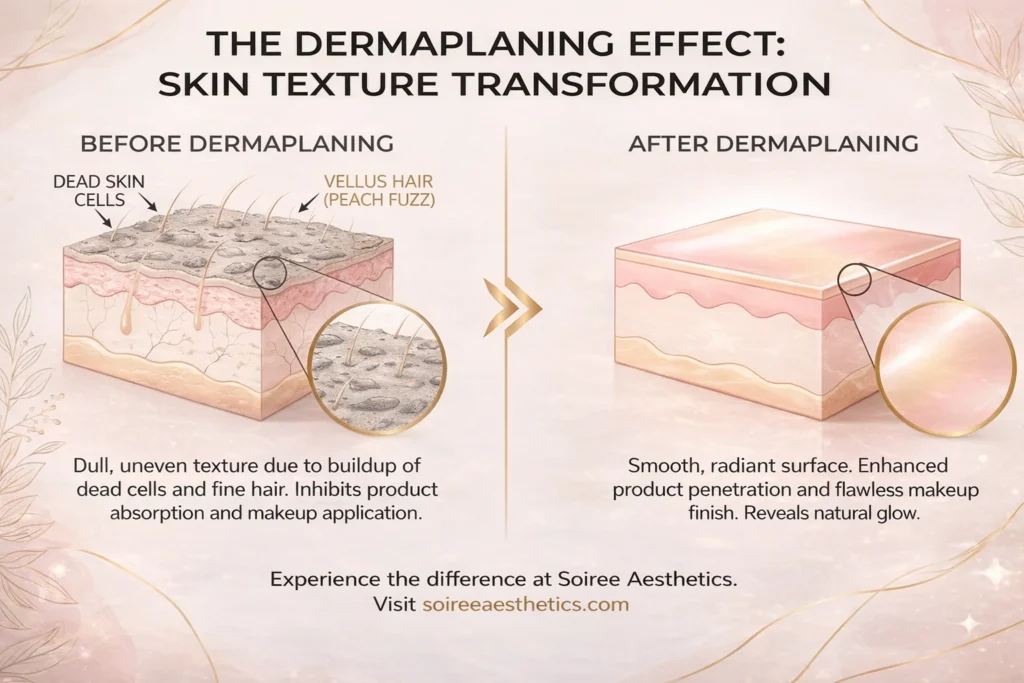
Dermaplaning precisely removes the non-viable cells from the stratum corneum, promoting faster cellular turnover and revealing a smoother, renewed epidermal layer.
2. Removal of Peach Fuzz
The treatment eliminates fine vellus hair (peach fuzz), reducing surface irregularities and enhancing light reflection for a brighter, more even complexion.
By increasing epidermal permeability, dermaplaning allows active ingredients such as hyaluronic acid, vitamin C, and retinol to penetrate deeper and perform more effectively.
The controlled exfoliation process triggers a mild wound-healing response, stimulating fibroblast activity and collagen neogenesis for firmer, more elastic skin.
Regular dermaplaning sessions refine uneven skin texture and tone by removing keratinized debris and minimizing superficial hyperpigmentation.
It softens the appearance of shallow acne scars and fine lines, improving surface uniformity and skin smoothness over time.
7. Prevention of Breakouts
The procedure clears pore congestion and prevents comedone formation by eliminating dead skin buildup and surface-level impurities.
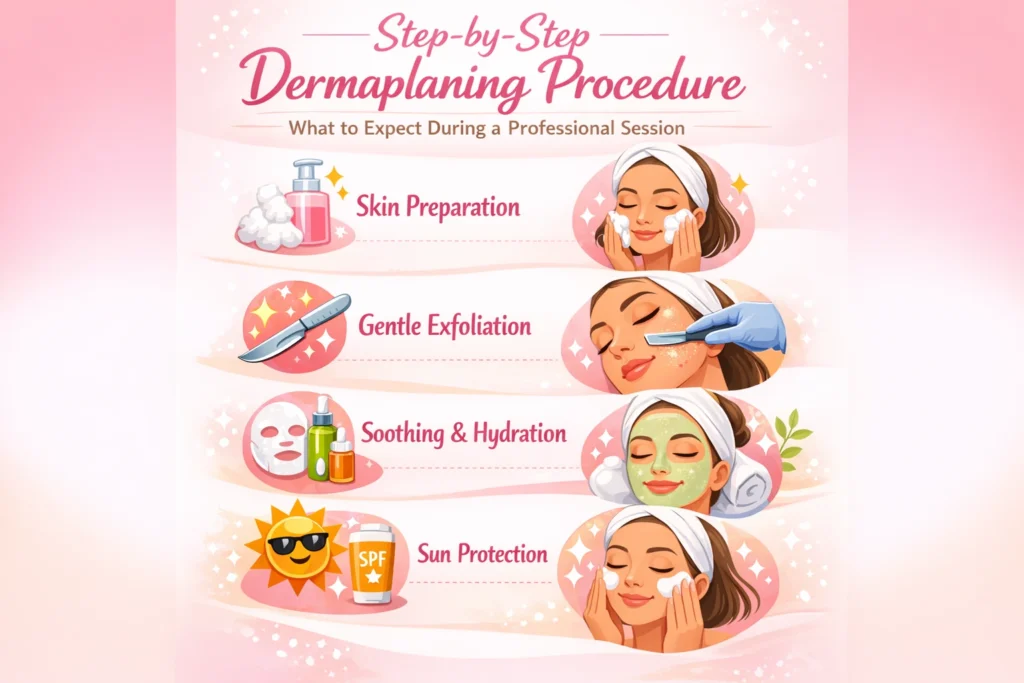
Understanding what happens during a professional dermaplaning procedure can help ease any hesitation and ensure you know exactly what to expect. The process is simple, safe, and takes roughly 30 to 45 minutes, depending on your skin’s needs.
Your aesthetician begins by thoroughly cleansing your face to remove dirt, excess oil, and makeup residue. A gentle degreasing solution is applied to ensure a completely clean surface, allowing the exfoliation process to be performed with maximum safety.
Using a sterile surgical scalpel held at a 45-degree angle, the professional glides the blade across your skin in controlled, feather-like strokes. This step removes dead skin cells and fine vellus hair, which helps refine the skin’s texture, boost circulation, and leave your complexion instantly brighter and smoother.
After exfoliation, your skin is treated with a hydrating serum or calming mask to restore moisture and nourishment. Ingredients like hyaluronic acid, peptides, and antioxidants are often used to replenish hydration, strengthen the skin barrier, and enhance post-procedure comfort.
Since freshly exfoliated skin is more photosensitive, the session concludes with the application of a broad-spectrum SPF. This crucial step protects against UV-induced damage and helps maintain the luminous glow achieved through the dermaplaning treatment.
A session one week before a special occasion ensures your complexion looks radiant and your makeup applies flawlessly.
Monthly sessions help keep the skin’s surface smooth, support better skincare absorption, and prevent dullness from recurring.
A customized treatment plan with slightly longer intervals (every 6–8 weeks) may be suggested by your aesthetician.
For expert-led, safe, and results-driven dermaplaning for glowing skin, it’s always best to visit a certified skincare clinic that tailors each session to your unique skin needs.
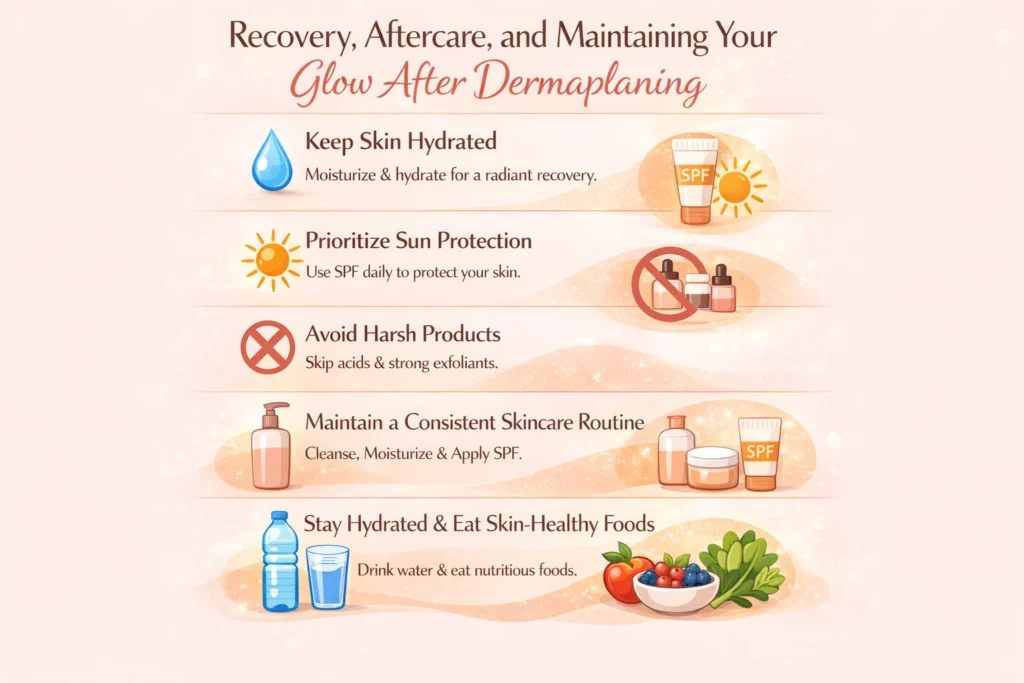
1. Keep Skin Hydrated: Use a lightweight, fragrance-free moisturizer to maintain hydration and prevent dryness. Look for ingredients like hyaluronic acid or ceramides.
2. Prioritize Sun Protection: Your fresh skin is more photosensitive. Apply a broad-spectrum SPF 30 or higher daily to avoid pigmentation or sun damage.
3. Avoid Harsh Products: For 48–72 hours, skip exfoliating acids (AHAs, BHAs, or retinoids) and any abrasive scrubs to prevent irritation.
4. Maintain a Consistent Skincare Routine: Gentle cleansing and regular use of nourishing serums will extend your post-dermaplaning glow.
5. Stay Hydrated and Eat Skin-Healthy Foods: Drinking plenty of water and eating antioxidant-rich foods like berries, nuts, and leafy greens supports long-term skin vitality.
If you’ve been struggling with deep acne scars, hyperpigmentation, or fine lines and wrinkles, treating them early is essential to prevent them from becoming more visible over time. Delaying treatment can make these concerns harder to manage, so it’s important to choose the right professionals who understand your skin’s needs and deliver safe, effective results.
At Soirée Aesthetics in Houston, TX, we specialize in dermaplaning treatments that gently exfoliate and rejuvenate your skin for a brighter and more radiant complexion. Each session, be it a stand-alone dermaplaning service or combined with a facial, chemical peel, or hydrodermabrasion, is customized to your skin’s condition and long-lasting glow. For more information, contact us at 713-960-2280.
Dermaplaning gently removes dead cells without disrupting the skin barrier. Skin may feel temporarily sensitive post-treatment, but proper hydration and SPF restore comfort while maintaining protection.
Results generally last three to four weeks, as the skin’s natural cell turnover cycle renews. Regular sessions help maintain smooth texture, enhanced glow, and improved product absorption.
Dermaplaning isn’t advised for active acne, open wounds, eczema, rosacea flare-ups, or certain skin infections. A professional consultation ensures safety and suitability for your skin concerns.
Avoid retinoids, exfoliants, and harsh treatments 3–5 days before and after. Post-treatment, limit sun exposure, use gentle skincare, and always apply broad-spectrum sunscreen daily.
Dermaplaning smooths skin and enhances product absorption, but it doesn’t directly remove clogged pores or milia. It pairs well with facials or extractions for clearer results.
Skincare can be applied immediately, as products absorb more effectively. Makeup is best applied the next day to minimize irritation and allow skin to settle comfortably.



A board-certified nurse practitioner with 16 years of advanced nursing experience, Dr. Olusola Calhoun seamlessly blends her medical expertise with her passion for aesthetics. She holds a Doctor of Nursing Practice degree from the University of Alabama and a Master of Nursing from Seton Hall University, along with an MBA and MHA. With a keen eye for detail and a commitment to client satisfaction, Dr. Calhoun ensures every treatment is personalized for optimal results.
Personal Interests: Family, travel, fitness, and nature.
Ready to transform your skincare routine? Our experts can help you achieve your skin goals.
Book Now