First Time Client: Enjoy $50 Off Initial Treatment


 Blog List
Uncategorized
Blog List
Uncategorized
 May 12, 2026
 You must have noticed these days that a lot of modern advancements in the skin care industry are coming, and amongst them, “med spas” really tops the list. They actually offer so many options, from fillers and facials to body contouring and fat reduction. This actually creates confusion in your mind, like, what is the best option for my skin type, will it pain, is it safe, and so much more. Honestly, no need to feel dumb about it, as we are here to help to you get out of this chaos. In this guide, we cover everything you need to know about medical spa treatments and the Texas regulations you must know as patients. Come, let’s begin!
Key Takeaways
|
A medical spa occupies a unique space between a traditional day spa and a clinical medical office. It offers FDA-approved, physician-overseen treatments, not limited to relaxation-focused services only. It is very important to understand this difference before booking any procedure, or you might end up going into a day spa experience.
It is more effective because medical-grade treatments use pharmaceutical-strength products available only through licensed channels. These are administered by trained clinicians who can customize dosing and manage complications. You won’t find all of this in any over-the-counter or day spa alternatives.
It requires:
All of this can only be safely provided by a licensed medical spa.
The Texas Medical Board (TMB) explicitly classifies nonsurgical cosmetic procedures, including all cosmetic injections, as the practice of medicine. Under 22 TAC Chapter 169, Subchapter E, a physician, PA, or APRN must:
A Good Faith Exam (GFE) is a legally required face-to-face medical evaluation, conducted by a physician, PA, or APRN. Before starting any injectable or prescription-device procedure, they review your:
If your provider is skipping this step, then it is a regulatory violation and a patient safety risk.
A medical director is a licensed physician who supervises, approves, and takes medical-legal responsibility for all procedures performed at a med spa. They:
So, after reading all of this, if you decide to get any med spa treatments, make sure to reach out to Soirée Aesthetics and schedule a consultation with our founder, Dr. Olusola Calhoun, for more detailed information.
Botulinum toxin type A (BoNT-A) blocks the release of acetylcholine at the neuromuscular junction, which temporarily prevents muscle contraction. When injected properly into targeted facial muscles, it relaxes repetitive movements that cause dynamic wrinkles.
| Feature | Botox | Dysport | Xeomin | Jeuveau | Daxxify | Letybo |
| Manufacturer | Allergan / AbbVie | Galderma | Merz | Evolus | Revance | Hugel |
| Onset Time | 3–7 days | 2–5 days | 3–5 days | 2–3 days | 3–4 days | Similar to Botox |
| Formulation | Contains accessory proteins | Contains accessory proteins + lactose | No accessory proteins (“naked Botox”) | Hi-Pure technology | Peptide-based (RTP004), no accessory proteins | Standard formulation |
It includes areas like:
Results from most neurotoxins last 3–4 months. However, Daxxify lasts for 6–9 months. Factors that influence how long results persist are:
By injecting them into your underarms, palms, or soles, neurotoxin injections treat hyperhidrosis (excessive sweating). They interrupt the signal between the nerves and the sweat glands for 6–12 months without affecting normal body temperature regulation. Indeed, neurotoxins are one of the best treatments for hyperhidrosis.
It means getting small amounts of Botox in your late 20s–early 30s to relax facial muscles, so repeated expressions don’t turn into permanent wrinkles over time. Ideal candidates include:
Injecting neurotoxins into the masseter muscle reduces its bulk over time and gives you a more oval jawline. It also alleviates the pain, jaw clenching, and headaches associated with temporomandibular joint (TMJ) disorder.

It is one of the most commonly performed dermal fillers in Houston. Hyaluronic acid is a naturally occurring substance in the skin that attracts and retains water. When injected as a cross-linked gel, it binds water, restores volume, integrates with tissue, and is gradually broken down by hyaluronidase.
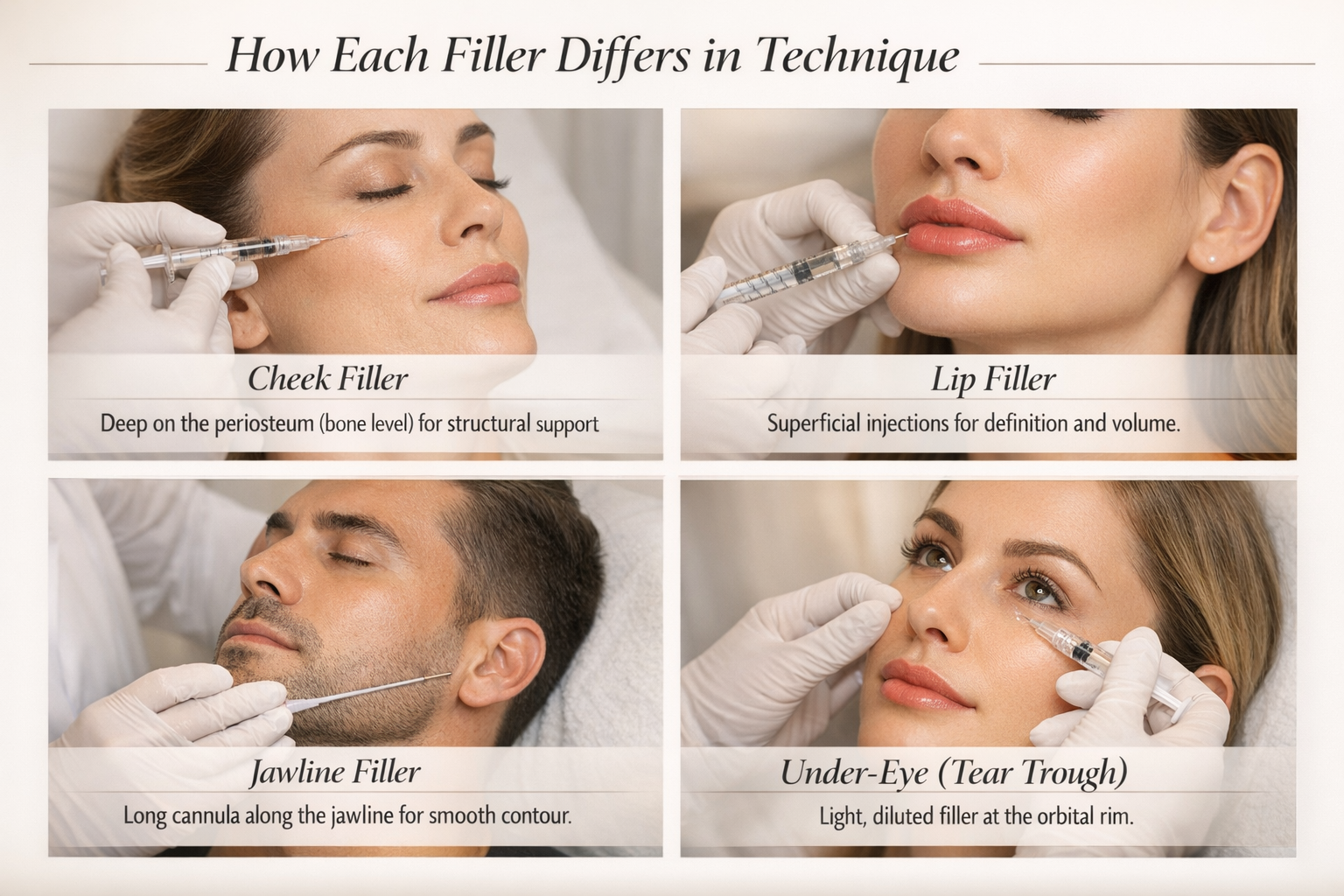
Filler dissolving uses hyaluronidase to break down HA fillers rapidly within 24–72 hours. It becomes medically necessary:
Its PLLA microparticles provoke a controlled inflammatory response that stimulates fibroblasts to produce new type I collagen along the injection pathway. This way is actually a smarter approach to facial rejuvenation & anti-aging.
Radiesse delivers two actions simultaneously: first, an immediate structural volume via its CaHA microsphere gel matrix. Then, sustained collagen stimulation as the microspheres absorb water. Unlike HA fillers, Radiesse is not reversible.
Biostimulators work with your biology rather than simply replacing volume, producing results that look and feel like your own tissue. Because improvement builds gradually over weeks and months, patients achieve meaningful rejuvenation.
PDO (polydioxanone) threads are absorbable sutures inserted beneath the skin via a fine needle or cannula, and they immediately lift and reposition sagging tissue. As they dissolve over 4–6 months, they trigger fibroblast activity and neocollagenesis along the thread tract, thus producing tightening that outlasts the thread itself.
| Type | Structure | Collagen Stimulation | Lifting Power |
| Smooth (Mono) | Single straight thread, no barbs | Moderate | Minimal |
| Barbed (Cog) | Bi-directional barbs that anchor into tissue | High | Strong mechanical lift |
| Screw (Twist) | Two threads wound around each other | High | Moderate |
During the recovery period, you can expect some soreness and swelling for 3–7 days. The results, on the other hand, last for 12–18 months (lifting effect) and the ongoing collagen for 2+ years.
If you have any doubts regarding how it looks, on an individual, why don’t you have a look at our gallery of before-and-after results?
Threads mechanically re-anchor descended tissue, creating a scaffolding effect. Fillers then volumize areas of deflation that threads cannot address. Together, they address two primary mechanisms of facial anatomy: structural integrity and soft-tissue fullness, without surgery.
In microneedling treatment, the superficial dermis is stimulated to produce collagen and elastin, while threads work at a deeper structural level. Performed in the right sequence, typically microneedling 4–6 weeks after thread placement, the combination gives collagen remodeling and enhances the longevity of the lift.
A full-face consultation involves:
Your provider photographs your face from multiple angles, maps areas of concern, reviews your medical history, and presents a clear treatment roadmap.
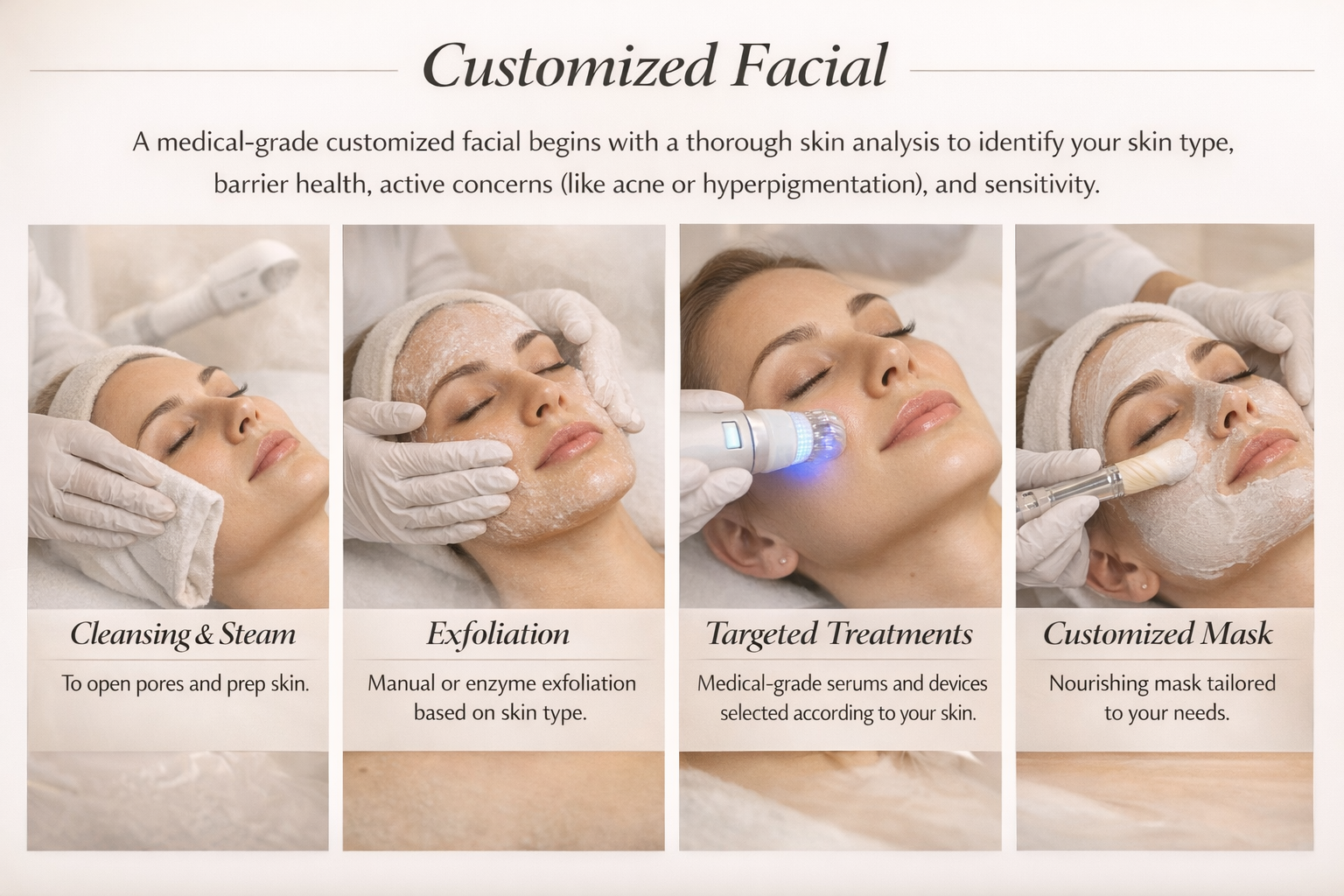
Chemical peels apply exfoliating acids to the skin, promoting cell turnover and reducing pigmentation. Based on your skin’s condition, depth is selected, as:
Using a sterile surgical scalpel, dermaplaning manually exfoliates the outermost layer of dead skin cells and vellus hair (peach fuzz) from the face. It works in Houston’s climate because high humidity and oil production create a constant buildup on surfaces. Thus, clearing the skin’s surface, it allows serums and medical-grade products to be absorbed up to 70% more effectively.
When performed in sequence, dermaplaning first removes debris from the outer layer, allowing the chemical peel solution to penetrate more deeply. This layered way delivers more uniform exfoliation and reduces the risk of peel-solution pooling.
For any further confusion about how dermaplanning works, the benefits, or the procedure, have a look at our full guide.
Microneedling creates controlled micro-injuries in the dermis using fine needles, activating the skin’s wound-healing cascade. This stimulates fibroblasts to produce type I and III collagen and elastin, while also triggering angiogenesis. Over 4–6 weeks, the remodeling phase deposits new collagen and thus improves skin texture.
The summer here demands lightweight hydration, antioxidant-forward skincare, and avoidance of aggressive resurfacing during peak UV intensity. Fall and winter are the clinical sweet spot for medium-depth peels, microneedling series, and biostimulator courses, when healing skin is not battling any daily UV exposure.
Dermatosis Papulosa Nigra consists of small, benign, pigmented papules on the cheeks, temples, and neck, most common in individuals with darker skin tones. While it is entirely benign, many patients choose cosmetic removal, performed by experts. The wrong method on melanin-rich skin can cause dark spots (PIH) or scars, which trained professionals avoid by choosing the safest removal option.
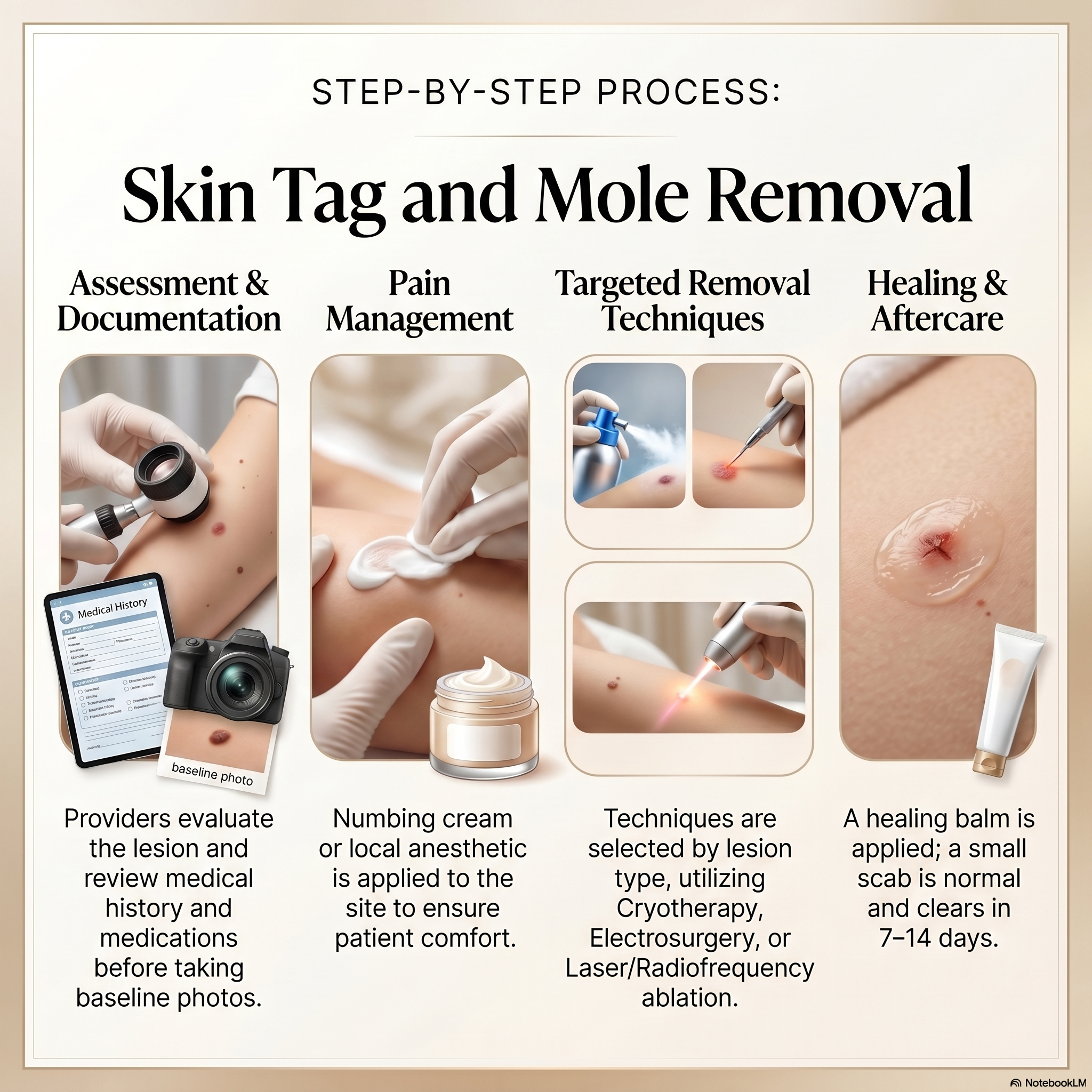
The area needs to be clean and dry for 24–48 hours. Avoid direct sun exposure for 4–6 weeks and apply SPF 50 daily to prevent PIH. Do not scratch any scabs during healing. Skin tag recurrence is possible if the root cause, like friction, insulin resistance, or hormonal shifts, remains unaddressed.
You can visit Soirée Aesthetics, med spa, anytime, if you have any doubts regarding DPN / Skin Tag Mole Removal.
Intravenous hydration delivers electrolytes, vitamins, and medications directly into the bloodstream, achieving 100% bioavailability instantly. IV delivery is medically superior for rapid rehydration, post-illness recovery, and immune support.
The Texas HB 3749 — Jenifer’s Law requires all elective IV therapy outside of physician offices and licensed facilities to be:
Medical oversight ensures every IV therapy patient receives a:
You can read more about IV Hydration Therapy in our guide, which covers its benefits, nutrients & so much more.
| Feature | PRP (Platelet-Rich Plasma) | PRF (Platelet-Rich Fibrin) |
| Source | Patient’s own blood | Patient’s own blood |
| Preparation | Centrifuged with anticoagulant — produces a liquid concentration | Centrifuged without anticoagulant — fibrin matrix naturally forms |
| Growth Factor Release | Rapid burst release over 7–10 days | Slow, sustained release over 4–8 weeks |
| Consistency | Liquid, so injectable into deeper tissue layers | Gel, used topically or injected superficially |
| Best For | Scalp (hair restoration), joint treatment, and deep skin injections | Skin rejuvenation, tear trough area, surface healing, and facial microneedling |
PRP and PRF deliver concentrated growth factors, like PDGF, TGF-β, VEGF, and EGF, that directly activate fibroblasts and keratinocytes. On the scalp, PRP reactivates dormant follicles and extends the hair’s active growth phase. On the face, platelet treatments, combined with microneedling, amplify collagen induction.
The vitamin injections include: B12 ( cyanocobalamin) for energy and neurological function; B-complex for metabolic support; and vitamin D for immune and bone health. Every protocol is customized to the patient’s bloodwork, presenting symptoms, and specific wellness objectives.
You will also be happy to find our holiday beauty offers, so don’t miss out.
It is a naturally occurring bile acid, which, when injected into fat tissue, disrupts the lipid membranes of fat cells, causing irreversible cytolysis. Destroyed fat cells are cleared through the lymphatic system over several weeks. Because the cells are permanently eliminated, results remain stable over the long term, provided body weight does not change significantly.
Kybella is the only FDA-approved injectable for reducing moderate-to-severe submental fat. It is the fat beneath your chin, commonly called the “double chin.”
One of the widely used fat-dissolving agents, PCDC (phosphatidylcholine/deoxycholic acid compound), however, is not FDA-approved. Unlike Kybella’s single deoxycholic acid formulation, it combines phosphatidylcholine with deoxycholic acid. So, when used in the U.S., it comes from compounding pharmacies.
Most patients need 2–6 sessions spaced 4–6 weeks apart. Results develop gradually over 4–8 weeks per session as the lymphatic system clears destroyed fat cells. You can expect post-treatment swelling, firmness, and temporary numbness, which will resolve within 2–4 weeks.
Need a little more help? Make sure to reach out to us with any questions about fat-dissolving injections.
Under 22 TAC Chapter 169, Subchapter E (effective January 2025), the Texas Medical Board formally classifies all nonsurgical cosmetic procedures, used for cosmetic purposes, as the practice of medicine. Every such procedure requires physician delegation, documented written protocols, staff training, supervision, and mandatory public posting of physician identity and complaint notices.
The Texas Department of Licensing and Regulation (TDLR) licenses estheticians and cosmetology operators for skincare, not medicine.
| Can do | Cannot do |
| Perform facials, waxing, and skin cleansing | Administer Botox, fillers, or any injectable |
| Apply non-prescription topical products | Use prescription devices for cosmetic purposes |
| Conduct dermaplaning (surface exfoliation) | Perform medium or deep chemical peels |
| Deliver basic superficial skin treatments | Diagnose skin conditions or prescribe treatment |
| Assist with aftercare under clinical direction | Independently supervise or order medical treatments |
Injectables sourced from any unverified suppliers, foreign markets, or online platforms lack the sterility, concentration accuracy, and potency standards required by FDA approval. Patients have no regulatory recourse and face documented risks, tissue necrosis, permanent disfigurement, and, in the most severe cases, death.
In 2024, the CDC and FDA launched a multistate investigation after patients developed botulism-like symptoms following counterfeit botulinum toxin injections. All cases involved injections by unlicensed or untrained individuals in non-clinical settings. Several patients were hospitalized. Counterfeit products are identifiable by non-English packaging, lot number C3709C3, and the label listing “Botulinum Toxin Type A” rather than the correct FDA-approved name “OnabotulinumtoxinA.” The FDA continues to work on removal and urges exclusive use by authorized U.S. distributors.
Houston’s 60–90% humidity traps sebum, bacteria, and pollutants on skin, which can cause acne, clogged pores, and fungal conditions.
Want to get that non-sweaty glow? You can check out our Houston glow-up guide for summer.
Houston’s summer UV index regularly hits 10–11+, destroying collagen and elastin daily, which accelerates photoaging, hyperpigmentation, and skin cancer risk far beyond any average U.S. city.
April–October:
November–March:
If you deal with any skin condition that worsens in winter, remember to consult Soirée Aesthetics, as we offer treatments to help your skin withstand cold weather.
Through the whole above reading, you need to understand one thing: that your skin is a long-term investment, and the clinic you choose for your treatment is part of that investment. So, why don’t you choose Soirée Aesthetics? We provide advanced med spa treatments with the assistance of skilled professionals who carefully assess everything about your skin before starting.
Glow like never before. Reach out to us for more information!
Most patients feel only a brief pinch. Also, topical numbing minimizes discomfort significantly.
No, you need to avoid heavy exercise for 24–48 hours after any dermal filler treatment.
Absolutely, neurotoxins and fillers are increasingly popular among men these days.
You should avoid alcohol, fish oil, and blood thinners 24–48 hours before any injectable treatment.
No, you cannot. Botox and all neurotoxins are contraindicated during pregnancy and breastfeeding entirely.



A board-certified nurse practitioner with 16 years of advanced nursing experience, Dr. Olusola Calhoun seamlessly blends her medical expertise with her passion for aesthetics. She holds a Doctor of Nursing Practice degree from the University of Alabama and a Master of Nursing from Seton Hall University, along with an MBA and MHA. With a keen eye for detail and a commitment to client satisfaction, Dr. Calhoun ensures every treatment is personalized for optimal results.
Personal Interests: Family, travel, fitness, and nature.
Ready to transform your skincare routine? Our experts can help you achieve your skin goals.
Book Now